

This was one of my most notable (ad)ventures yet.
I built an affiliate empire that lasted for a good part of a decade, and supported many livelihoods—but, as with most things in life (spoiler alert), eventually it came crumbling down.
In hindsight, I would have done many things differently, but I am very grateful for this bittersweet experience.
This is my affiliate marketing journey
Around 15 years ago (2010) it was fairly easy to rank a website in Google.
Good architecture, structured urls, SEO semantic HTML, pages with relevant (human-written) content, and of course—a few backlinks. Whoala—your website is ranking in just mere weeks!
I went down this rabbit hole
Like all stories that start out with humble beginnings, I was just another web designer—looking for a payday.
Around late 2009/10, I was introduced to Google AdSense by an affiliate marketer. He was a friend of a friend. He didn’t have better or more web skills than me, but his ability to monetize content was far superior. Monetize passively—easily.
For a long time, I was quite non-receptive to what he was doing, simply because I didn’t understand it.
He ran a couple of directory websites. One of them was called PinkFridge.com; Online Magazine for UK Women (Love, Health & Beauty, Shopping, Travel). It didn’t look like much, in fact, the design was terrible, but he had targeted all of the right keywords, and was making an absolute killing from the advertising.
Back in those days, these were the types of sites that actually made a ton of money.
Earn money while you sleep!
This kind of business model wasn’t unique, nor was it new.
The start of my work came from a sense of urgency, rather than excitement. I started working on my websites—without a business plan, nor a forecast. Just a leap of faith and an ambition to earn passive income.
I researched and discovered a list of the highest paid keywords for specific industries. Registered a couple of keyword-loaded insurance and loan domains in South Africa, Australia, New Zealand, and the UK.
Utilising my web and SEO skills, I built a few simple 20–30 page websites. I used SilverStripe CMS to set them up, worked with a few freelance content writers (the cheap ones), and had the websites deployed to a hosting provider (also cheap).
Applied for my monetization method, Google Adsense—and that’s all I needed to get going.
The initial websites didn’t look like much. [wayback archive]
I received the Google Adsense approval code (in the post) and quickly linked it up to all live sites.
It wasn’t long before the clicks started to monetize. Passive income, baby!
Slowly, but surely—passive income was coming in, month-after-month. Not a lot to start off with, but it was decent.
This allowed me to formalize my business, and hire a small team remotely (content writer, email marketing, and data entry), and create more websites.
Between 2014/15, I pushed further (down the rabbit hole):
I grew each site to around 300–400 pages of content, I’d like to believe this content was insightful and useful information to the public.
I focused heavily on improving technical SEO, user experience (UX), and the overall look and feel (UI) of the websites.
I also started capturing visitor email addresses using a simple form-to-email, which quickly grew my database to over 50,000 leads.
In August 2015, I started using email marketing to drive traffic back to the websites. This was by far a game-changer. More traffic meant more clicks, and more clicks meant more revenue. By the end of the year, I was earning a consistent “extra salary” month-after-month.
Notably, September 2015 was a milestone—the month my AdSense revenue matched my full-time salary. By December of that year, I made almost double my full-time salary.
From 2017 to 2019, I hired for scale, and eventually ended up with a small remote team to grow my operations; content writers, web developers, data administrators, and a team lead to be my right hand, and help me run all of this. Each website was carefully designed to find loans online, with a focus on quality UI and UX design.
Remembering notable months, like December of 2017—with little overheads—I made an excess of +US$20k per month.
For a few years, this seemed to work. We repeated the cycle. We refreshed the designs, cleaned up the code, improved the content, again and again—one website after another.
I kept pushing forward, elaborating on the websites; better content, more pages, more traffic, and ultimately—more clicks.
[wayback archive]
I ended up with around 15 websites, that were well-designed for the user, perfectly optimized for Google and performance. As well as the data administrator that administered them.
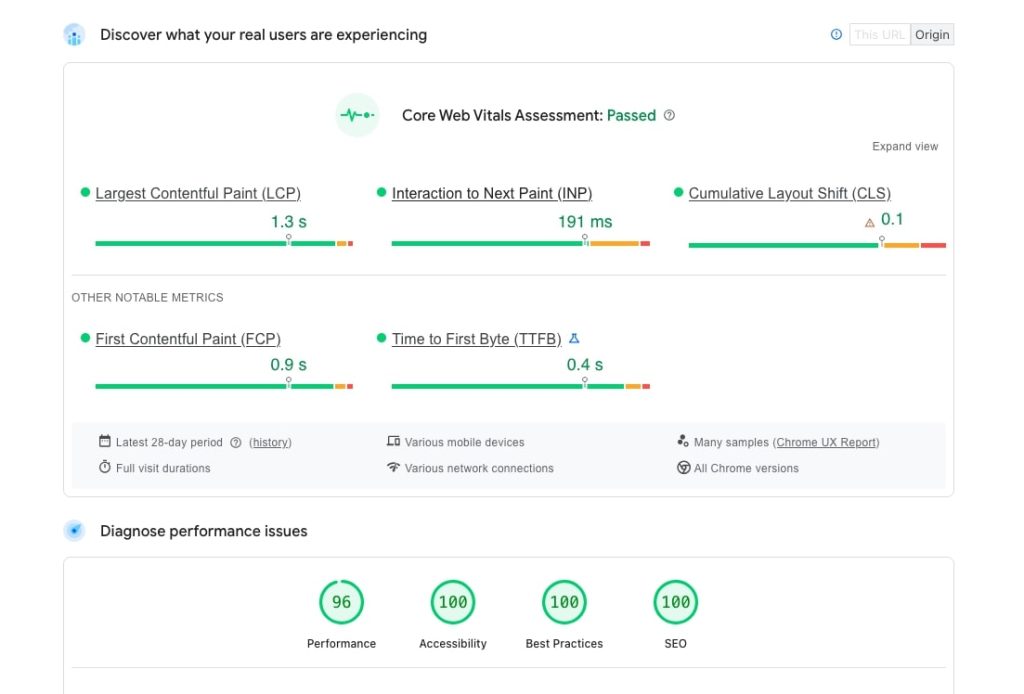
Google seemed to really like these websites, the traffic kept climbing, the revenue along with it.
It almost seemed too good to be true—and… it was.
Affiliate websites are like pop-up shops
Here today—gone tomorrow.
Don’t put all your eggs in one basket—they say! That was a really useful lesson, but a hard pill to swallow.
In one instance, I had around US$10,000 pending payout, and Google Adsense permanently suspended my account. Of course, they give you an opportunity to object the suspension, or at the very least confirm that you’ve fixed the issues on your website, but that’s mostly all useless. That money was gone. There’s no one I could call, or complain to. Google Adsense © All Rights Reserved—haha.
Once I recovered from this loss, I put a lot of my focus into diversification. I tried to monetize in other different ways. I signed up directly with loan and insurance providers. I plugged my leads into different APIs that already had funnels setup for conversion.
Another one of my notable builds was LeadsPro—a platform that lenders, insurance providers, debt counsellers, as well as lawyers sign up to—and received leads instantly.
[screenshots]
The golden years of my empire were 2017-2023. The traffic was insane. Clicks were crazy. Leads kept flowing (daily) by the hundreds—Easy money, well over a Million in US dollars.
There comes a turning point in this type of business model, that I think I failed to understand—or initially see. When the money starts rolling, I should’ve pocketed a huge chunk of the profits instead of throwing it back into the business.
Like a gambler on a winning streak—I had dollar bills in my eyes!
A lot of the profits were thrown back into the business.
The problem was foresight—and longivety
When you’re winning, you forget that when you’re at the top, the only place you can go from there—is down.
I had read many stories of affiliate marketers that had a six-figure monthly revenue streams, and lost it all—almost overnight, because of Google. It would seem, that my business model had joined this statistic.
I’ve spent the last 2 years (2024/25) digging into research and SEO, specifically on affiliate/ review (YMYL) websites in 2025; I can confidently conclude that Google has wiped 98% of these kind of websites from its index. I’ve also analysed many top-tier loan review websites, and see a lot of them trending similarly (with little-to-no organic traffic).
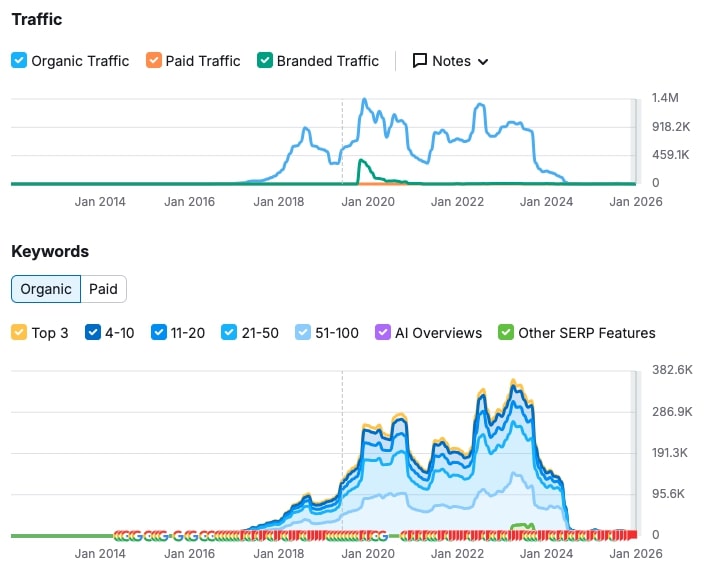
It makes a lot of sense, think about it—Google doesn’t want to rank third-party websites that review and recommend products and services from various brands. That’s what AI is supposed to do, reliably and on-the-spot, for every unique search query.
I would do it all over again, in a heartbeat
Despite the many challenges, endless failures (and lessons), the late nights and early mornings, the bridges burnt, the countless Cease and desist lawyers letters (haha)—I don’t regret a thing.
This journey taught me resilience, consistency, discipline, what it means to lead a team, and exactly what it takes to earn money without trading your time for it!
At the end of all this, I can say that most of it was quite unpredictable, and it was extremely challenging to make any business, financial, or personal plans further than a month in advance. There was always a lot of stress around the next Google algorithm update—and that’s because I solely relied on them for traffic. There’s a valuable lesson in there.
For a little more than 10 years, I lived month-to-month and tried to grab as much as I could—with both hands full. This allowed me many spoils in life!
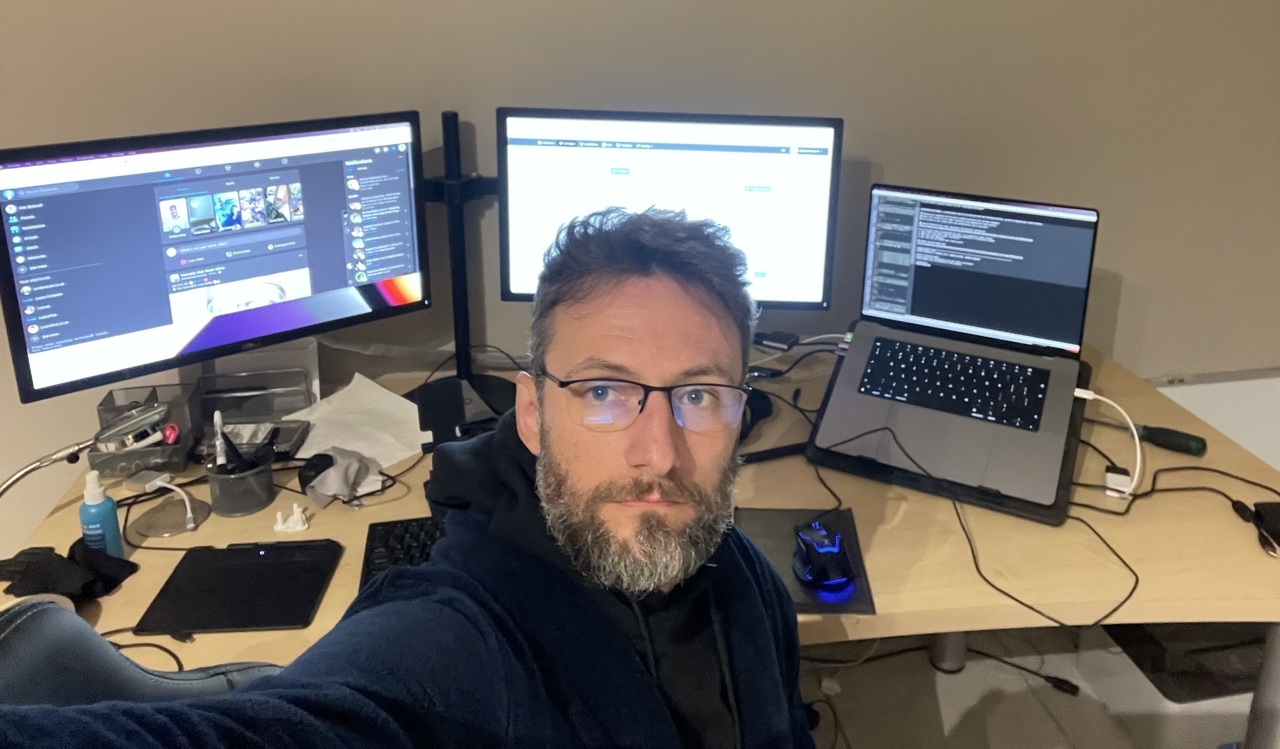
A huge Thanks to the people that walked alongside me during my journey.
I leave you (and entrepreneurs alike) with a quote that stuck with me through the years.
“You’re only as strong as the team that supports you!”
And a closing quote, for anyone doubting themselves.
“Every man who has achieved anything has been a gambler!”